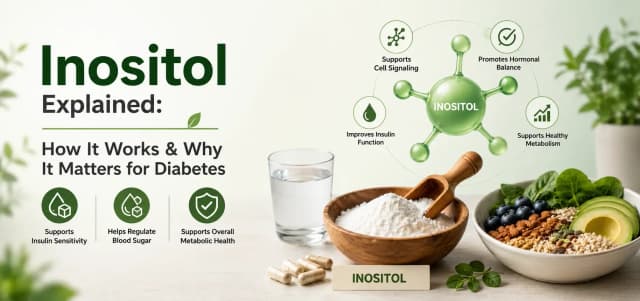
Table of Contents What Is Inositol? Why Are People Talking About Inositol? How It Works Inside the Body What It Has To Do With Blood Sugar Different Types of Inositol Supplements and Tablets Can It Help With Insulin Resistance? Things You Should Know Before Taking It Small Habits Still Matter More Final Thoughts FAQs What Is Inositol? Most people don't hear about inositol until they start researching blood sugar, insulin resistance, or diabetes support. And honestly, the name sounds more complicated than it really is. It is a naturally occurring substance already present in the body. It's also found in foods like beans, fruits, grains, and nuts. Your body uses it in different processes related to cell communication and metabolism. Some people call it part of the vitamin B family, even though it's technically not classified as a vitamin. The reason it gets attention in diabetes discussions is that researchers started looking into how it may support insulin function inside the body. That's where interest in these supplement products really started growing. Why Are People Talking About Inositol? A few years ago, most conversations around diabetes focused only on sugar. Avoid sweets, cut desserts, and reduce soft drinks. That was pretty much the advice everyone heard. Now people understand there's more to blood sugar health than just avoiding sugar itself. The body's response to insulin matters too. That's why supplements connected to insulin sensitivity have become more popular recently. People want to understand not only what they eat, but also how their bodies process it. Some studies suggest certain forms of inositol may help support insulin signaling, especially in people dealing with insulin resistance. That doesn't mean it "cures" diabetes, and it definitely doesn't replace medical treatment. But it explains why more people are becoming curious about it. And honestly, when people are trying to improve their health, they naturally start exploring supportive options beyond the basics. How Inositol Works Inside the Body The easiest way to understand inositol supplements is to think of it as part of the body's internal communication system. Your cells are constantly sending signals to each other. It helps support some of those signals, particularly the ones connected to insulin activity. Normally, insulin helps move glucose from the bloodstream into cells where it becomes energy. But when insulin resistance develops, the body struggles to respond properly. That's when blood sugar levels can start becoming harder to manage. Researchers became interested in whether this could support how the body responds to insulin signals. Some studies suggest it may help support insulin sensitivity in certain individuals, especially when combined with healthier lifestyle habits. The important thing here is balance. No supplement works like magic on its own. Real improvements usually happen when several healthy habits work together. What It To Do With Blood Sugar A lot of people think blood sugar management is only about eating less sugar. But blood sugar is affected by much more than that. Sleep, stress, movement, hormones, meal timing, and insulin response all play a role, too. That's one reason people explore inositol tablets or powders while trying to improve their overall metabolic health. The goal is usually to support: Insulin sensitivity Glucose balance Energy levels Metabolic function Some people say they feel more stable energy-wise after improving their overall routine with supplements and better eating habits. Others may not notice dramatic changes immediately. And honestly, that's normal. Supplements rarely create overnight results. Most long-term improvements happen gradually. Different Types of Inositol This is the part that sometimes confuses people. There isn't just one kind of inositol. The two forms most commonly discussed are: Myo-inositol D-chiro-inositol Myo-inositol is usually the more common form found in supplements. It's often linked to insulin sensitivity and metabolic support. D-chiro-inositol also plays a role in insulin-related processes inside the body. Some products combine both. For most people, though, the scientific names are less important than understanding the overall purpose: supporting the body's normal insulin function. Inositol Supplements and Tablets Today, inositol supplements come in different forms depending on what fits best with someone's routine. Some people prefer powders because they mix into water or smoothies easily. Others choose inositol tablets because they're quicker and simpler to take daily. When choosing supplements, people usually look for: Trusted brands Clear ingredient labels No unnecessary added sugars Proper dosage instructions That last point matters more than people think. A common mistake is assuming more always means better. But with supplements, consistency usually matters more than taking very high amounts. And honestly, taking ten different supplements inconsistently rarely helps as much as following a simple routine properly. Can Inositol Help With Insulin Resistance? Some research suggests inositol supplement may help support insulin sensitivity in some people with insulin resistance or metabolic concerns. Insulin sensitivity is basically how well the body responds to insulin. As the response improves, the body might be better able to deal with glucose. This might help support: Improved blood sugar control More stable energy Enhanced metabolic efficiency But results may vary from person to person. Some people see improvements happening gradually over time. Others may not see obvious changes immediately. That's why it's so important to have realistic expectations. Supplements are generally supportive, not instant fixes. Things You Should Know Before Taking It Even though inositol supplements are widely available, it's still important to approach supplements carefully. A few simple things are worth remembering: Everyone responds differently Results usually take time Healthy habits still matter most Medical guidance is important for people already using diabetes medication Some people tolerate it perfectly fine. Others may experience mild stomach discomfort initially. That's one reason why it's always smarter to speak with a healthcare professional before adding new supplements to your routine. Small Habits Still Matter More One thing people sometimes forget is that no supplement can completely replace daily habits. Even if someone takes inositol tablets, long-term blood sugar management still depends heavily on: Balanced meals Better sleep Regular movement Stress management Consistent routines And honestly, those basics are usually the real game changers over time. Supplements can support the process, but they work best when the foundation is already improving. Final Thoughts The interest in inositol supplements is growing as people learn more about insulin resistance and metabolic health. People are not just looking at sugar as a product, but rather how the body works with glucose internally. That's why it has been part of the conversation around diabetes support. But the most important thing to remember is that progress is more often the result of consistency rather than quick fixes. Trends will always be secondary to better habits, proper medical guidance, balanced nutrition, and realistic expectations. That approach, to be honest, tends to work better in the long run anyway. Disclaimer: Diabmart's health article is for informational purposes only. If you have any medical condition, including diabetes, please talk to your doctor before making dietary, lifestyle, or product choices. FAQs What is inositol used for? It is commonly used to support insulin sensitivity, metabolic support, and overall wellness. Is inositol a vitamin? It's often associated with the vitamin B family, although technically it is not classified as a vitamin. Can inositol help support blood sugar balance? Some studies suggest it may support insulin sensitivity in certain individuals. What forms does inositol come in? It is commonly available as powders, capsules, and tablets. Should I take inositol without medical advice? It's always safer to speak with a healthcare professional before starting supplements, especially if you have diabetes or take medication. References Cleveland Clinic. Inositol Overview WebMD. Inositol: Uses and Benefits Healthline. What Is Inositol and How Does It Work?